



AI is Awful
(and also sometimes great)
What you actually need to know to make up your own mind
About this article
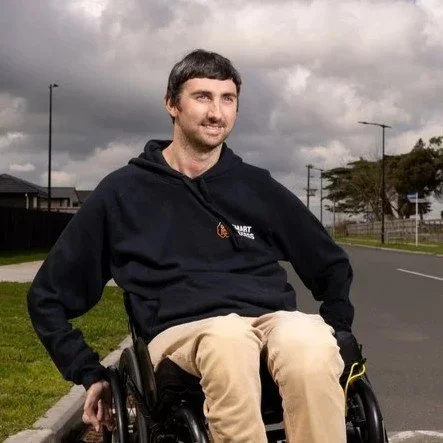
Our colleague Tim is tetraplegic. Each morning he uses AI to open his son's curtains.
Somewhere else, an algorithm quietly filters a job application out of a pile, and no one will ever explain why.
Both happen all the time. Both are AI. One gives a person more control over their own life. The other takes it away without explanation. And whether you've typed a prompt into ChatGPT or not, this technology is already shaping decisions about your life — including some you'll never see coming.
Kia ora. I'm Ingrid, and I wrote this with my colleague Ollie. At My Life My Voice we've spent the last year exploring AI in the disability sector — running training for Deaf and Disabled people, and working through our Workforce Futures project to understand what these tools mean for the people who support them.
What we've found is harder to summarise than either side of the loud debate suggests. AI can meaningfully increase independence and control for Disabled people. It can also cause real harm — to communities, to data sovereignty, to people who never signed up to be part of any of this.
This article isn't asking you to pick a side. It's asking whether you understand enough about AI to recognise when it's shaping your life — and to have a real say in how that goes.
Reading Time: Approx 12 minutes. This page includes a lot of information. Some people—especially those using screen readers—may prefer to read it in sections or take breaks.
Last updated: 11 May 2026
Tim Young

Ollie Goulden
Two people you should know about
I mentioned Tim at the top — here's the fuller picture.
Tim's smart home technology isn't a nice-to-have. It's what allows him to control his own environment. He can open his son's curtains, turn on music, unlock the door, call for help if he needs it. These aren't features. They're the difference between independence and not.
Then there's Ollie. He's a wheelchair user, and he also navigates the world with a neurodivergent brain. AI helps him in a different way to Tim — not just with physical access, but with the cognitive load of daily life. Managing support worker schedules. Wording a tricky email. Keeping on top of the executive functioning tasks that can stack up fast. For Ollie, having an AI tool available is like having a thinking partner on hand — it frees up his brain for the things that actually matter.
Tim and Ollie are who this technology is supposed to serve — and they're also who gets left behind when those conversations happen without us.
Keep them in mind as we go through the rest of this. Most of what follows only makes sense once you've got Tim's curtains and Ollie's inbox in your head.
You're probably already using it — without knowing
AI isn't new to your life. You're probably using it without realising. Recommendations on Netflix or Spotify. Your social media feed deciding what you see — and what you don't. Email filtering spam into a separate folder. Fraud detection on your bank account.
You didn't sign up for most of that. It was built into things you already use.
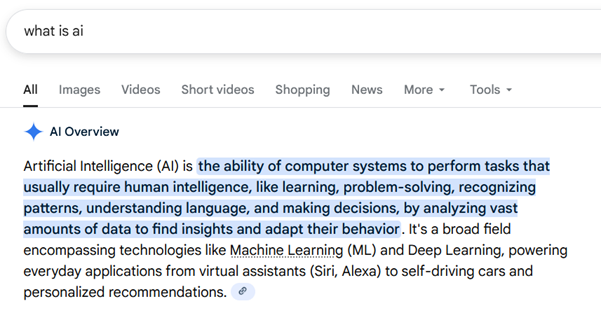
What's changed is that newer tools — like ChatGPT — make AI more visible. ChatGPT, Claude and others are examples of Generative AI: tools that learn patterns from huge amounts of existing text, images and music, then use those patterns to create new content that didn't exist before. Think of it like a remix machine — it doesn't copy, it generates, based on everything it's absorbed.
That's the thing that's new. But AI itself has been shaping your world for a while.
The concerns are real — and serious
All of that said: there are serious problems with AI that aren't going away. Here are the ones we think matter most.
The environmental cost
I want to tell you about my Tuesday, because the maths surprised me.
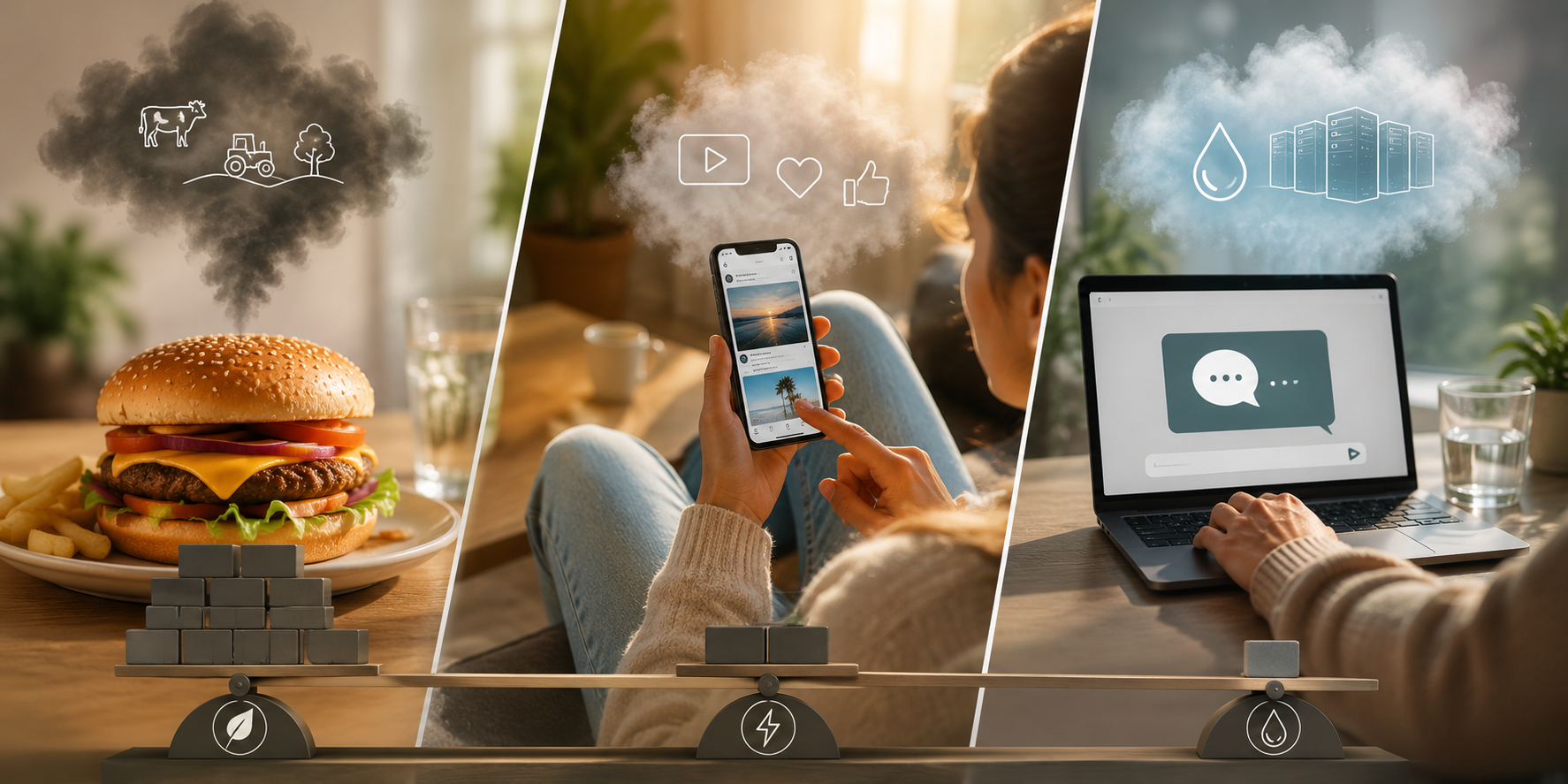
Last Tuesday I ate a hamburger for lunch, typed a question into ChatGPT to find a gluten free dinner idea for my family, and spent half an hour scrolling Instagram while I wound down in the evening. A pretty ordinary Tuesday. Also one that tells you something surprising about AI and the environment.
That hamburger: roughly 2,500 grams of CO₂ equivalent [i]. The ChatGPT prompt: somewhere between 2 and 4 grams, depending on whose estimate you use [ii]. Which means I'd need to send hundreds of ChatGPT queries to match the carbon cost of that single burger.
The Instagram scroll? Thirty minutes generates around 45 grams of CO₂ — the equivalent of about 10 to 20 ChatGPT prompts [iii].
I'm not sharing this to say AI has no environmental cost. It does. I'm sharing it because when we talk about AI and harm, the picture is rarely as simple as the loudest voices suggest.
Each ChatGPT prompt also uses water — estimates range from about one-fifteenth of a teaspoon to several teaspoons [iv]. One prompt isn't the issue. Billions of them, every day, are.
The headline numbers are reassuring at the level of a single dinner question. They become much less reassuring when you scale them up to a planet's worth of dinner questions.
When the cost lands somewhere else
Carbon and water are one part of the story. But environmental cost isn't an abstract average — it shows up in specific places, to specific people. The data centres that power AI — including the ones that answered my dinner question — are already changing life for real communities.
In the Mexican state of Querétaro, where Microsoft, Google and Amazon have built large data centres, the communities surrounding them face strict water rationing, some households receive water just three days a week. In the village of La Esperanza, near a Microsoft facility, about fifty people fell ill in a hepatitis outbreak after water outages left residents unable to maintain basic hygiene [v]. Microsoft disputes that its facility is linked to the water shortages or the outbreak [vi].
In Ireland, data centres now consume more than 20% of the country's electricity — a figure projected to rise to 32% by 2026. South Dublin County Council passed a motion in late 2025 calling for a nationwide moratorium on new data centres, except those powered entirely by renewable energy, saying communities were being forced to absorb the costs of someone else's digital expansion [vii].
The companies behind this infrastructure profit. The communities dealing with the consequences mostly don't.

Misinformation — it’s already happening
AI makes it easy to produce convincing false content at scale. Not future-tense. Now.
We're talking about targeted scams that sound exactly like your bank. Political content engineered to change how you think and vote. In January 2024, a deepfake recording of President Biden's voice was used to tell voters in New Hampshire not to vote in the presidential primary. It was completely fabricated. Thousands of people received it before it was identified [viii]. The tools to do this are cheap, accessible, and getting better fast.
When you're not sure what's real, it's harder to make good decisions. That's not an accident.
Bias — when AI decides about you
AI learns from the past. And the past wasn't fair.
When AI is used to screen job applications, assess people for benefits, or decide what healthcare someone receives — it doesn't start from scratch. It starts from patterns built on historical decisions. If those decisions were biased (and they were), AI can repeat and scale that bias, without anyone in the room being aware it's happening.
For Tim, AI is the tool that gives him control over his environment. For Ollie, it's a thinking partner that lifts the cognitive load of executive functioning. For someone else — someone whose application gets quietly filtered out, or whose benefit claim is flagged by an algorithm — AI might be something that just happens to them, with no explanation and no recourse.
All of these are true at once. Whether AI works for you or against you depends a lot on which side of the system you're standing on.
[i][i]Carbon footprint of a beef hamburger (~2.5 kg CO₂e): The Carbon Cost of One Beef Burger, Plant Based Minutes (https://plantbasedminutes.com/article/the-carbon-cost-of-one-beef-burger); Beef Carbon Footprint, CO2 Everything (https://www.co2everything.com/co2e-of/beef). Note: estimates vary by methodology, with some studies placing the figure higher (around 2.8–3.3 kg CO₂e).
[ii]Carbon footprint of a ChatGPT query (~2–4g CO₂): The Real Carbon Footprint of ChatGPT: 4.32g CO₂ Per Query, Piktochart (https://piktochart.com/blog/carbon-footprint-of-chatgpt/) — based on November 2022 query volumes; What's the carbon footprint of using ChatGPT? and August 2025 update, Hannah Ritchie (https://hannahritchie.substack.com/p/carbon-footprint-chatgpt; https://hannahritchie.substack.com/p/ai-footprint-august-2025) — Ritchie estimates around 2–3g per query and notes per-query energy use may be even lower than previously thought.
[iii]Carbon footprint of 30 minutes of Instagram scrolling (~45g CO₂): The carbon impact of Instagram app features, Greenspector (https://greenspector.com/en/6168-2/) — newsfeed scrolling measured at 1.549 gEqCO₂/minute.
[iv]Water use per AI query: Sam Altman: ChatGPT queries consume 0.000085 gallons of water, Data Centre Dynamics (https://www.datacenterdynamics.com/en/news/sam-altman-chatgpt-queries-consume-034-watt-hours-of-electricity-and-0000085-gallons-of-water/); How much water does AI consume? The public deserves to know, OECD.AI (https://oecd.ai/en/wonk/how-much-water-does-ai-consume) — note: estimates vary considerably depending on methodology, and Altman's figure does not include training costs.
[v]Community impacts of data centres in Mexico: Resistance blooms in Mexico's data centre valley, Context/TRF (https://www.context.news/ai/long-read/resistance-blooms-in-mexicos-data-centre-valley); Querétaro Data Center Boom Triggers Water, Power Backlash, Mexico Business News (https://mexicobusiness.news/cloudanddata/news/queretaro-data-center-boom-triggers-water-power-backlash).
[vi]Microsoft's response: Microsoft denies Mexico data center linked to water shortages, local illnesses, and power outages, Tom's Hardware (https://www.tomshardware.com/tech-industry/microsoft-denies-mexico-data-center-linked-to-water-shortages-local-illnesses-and-power-outages-stomach-bugs-and-even-hepatitis-reported-in-region-as-1-5-gigawatt-ai-data-center-buildout-looms).
[vii]Data centres and electricity in Ireland: Data Centres in Ireland: The State of Play, IIEA (https://www.iiea.com/blog/data-centres-in-ireland-the-state-of-play); South Dublin County Council passes motion calling for moratorium on new data centres, TheJournal.ie (https://www.thejournal.ie/data-centres-ireland-5-6812073-Sep2025/).
[viii]Biden deepfake robocall, New Hampshire 2024: FCC fines company behind Biden deepfake robocall, NBC News (https://www.nbcnews.com/politics/2024-election/fcc-fines-company-behind-biden-deepfake-robocall-rcna148593) — call monitoring service Nomorobo estimated between 5,000 and 25,000 calls were placed.
👉 Next step: Read our AI Safety article or watch our AI Safety Video(standard version) or NZSL Safety Video to understand the risks and how to use AI responsibly
👉 Explore our other AI resources
👉 Want to stay updated? Register here

Supported by the Workforce Futures Fund |Tahua Rāngaimahi Anamata